
Career Pathing for Employees
Developing career paths for employees requires intention and forethought. As an employer, you should be thinking about career growth before you even hire for a role. That means defining what success looks like for that position and mapping out the skills, achievements, and experience an employee will need to grow over time.
Career paths are one of the most powerful tools for employee retention. Gone are the days of “I deserve a raise because I’ve been here for years.” Today’s employees want to know how they can earn more, grow professionally, and build a future with your company. Career pathing shifts pay increases from time-based to achievement-based where both the employer and employee play an active role.
It also protects your quieter high performers. Employees who may not self-promote still have a structured way to earn raises and advance by meeting clearly defined goals and expectations.
How To Develop Career Paths for Employees
Each career level should include a defined pay range with clear entry and exit points. Think of it like a staircase:
- The level of the house represents the role.
- Each step represents specific skills, certifications, or performance achievements.

As employees complete each step, they move closer to the next level—both in responsibility and compensation.
What is Career Pathing?
Career pathing is the process used to create a structured, long-term, documented plan combining education, training, achievements, goals and on the job experience that moves individuals forward along a specific career and progressive higher-paying jobs within that discipline.
This gives employees a clear, documented plan for growth within your company! It begins when an employee is onboarded into an entry-level role and continues as they gain skills, experience, and achievements that prepare them for the next level.
A career path answers key questions for your employees:
- How do I move “up” in the company?
- What do I need to learn next?
- How do I earn more money here?
- Is there a future for me at this company?
When career paths are clearly defined, employees become more confident and capable. They understand your standards, your customers, and your way of operating. Instead of job hopping to try and advance their career and wages, they can do that while working for you and as the employer you can feel confident that the wages you are paying them is equal to the value they are providing.
Career paths also helps employers build talent from within rather than constantly trying to buy experience from the outside market.
How Certifications Fit into Career Paths
Certifications act as milestone achievements within a career path. They grow an employee’s skill set and provide measurable proof of development that justifies advancement and pay increases.
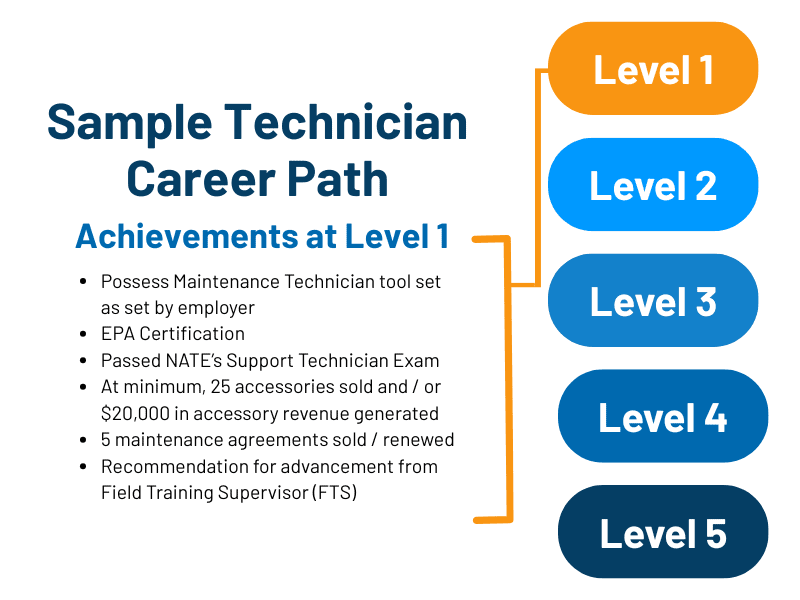
Start by identifying tangible achievements using tangible goals, certifications, licenses, or training programs align with each role and career level in your company.
For example:
Tangible goals might be selling a specific number of accessories, certifications such as safety licenses, technical certifications (like NATE, EPA, and PPATEC), manufacturer training, or contractor trainings often make sense at different career stages.
The key is alignment. Certifications should:
- Match the employee’s role and future responsibilities
- Improve job performance
- Support your company’s service quality and revenue goals
As employees earn these certifications and achieve other internal Goals, they should receive incremental pay increases. After all, the more your employee knows how to do, the more value they bring to your business. Incorporating certifications into your career paths also shifts training from being an expense to being an investment with a measurable return.
Why Is Career Pathing Important?
Career paths give employees:
- Goals to work toward
- Structure for advancement
- A clear way to earn more money
- A vision of their future with your company
One of the most common reasons employees leave their employers is the lack of growth and career progression. When people don’t see a way to advance their career, they start looking for one elsewhere. According to SHRM, nearly one-third of employees who leave their jobs do so because they don’t see enough opportunity to grow or move up.

Implementing career paths also helps you:
- Protect institutional knowledge by retaining key, long term employees
- Build experienced employees instead of constantly replacing them
- Reduce turnover and hiring costs
- Improve engagement and accountability with the employees
When structured properly, career paths also strengthen your onboarding and training process. Skill development connects directly to compensation, which creates clarity, fairness, and motivation across your team.
Instead of wondering what it takes to “get ahead”, employees know exactly what is expected of them.
Strengthen Your Team’s Growth Path
Career paths turn jobs into long-term careers and employees into future leaders. If you want a more motivated, skilled, and committed team, it’s time to put career pathing to work. Need help building career paths for your roles? Contact us to get started.